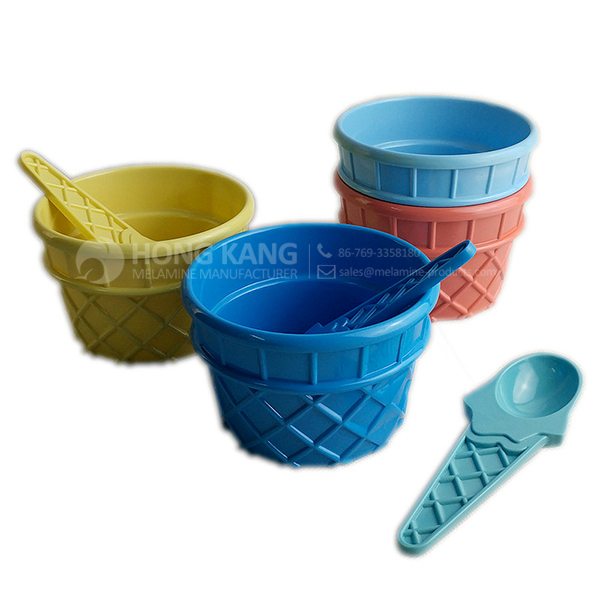
• Factory made hot-sale melamine ice cream bowls to venezuela Factories
    Product Detail

    Features

    Care Instructions

    Product Tags

    Related Video

    Feedback (2)

    To create more benefit for buyers is our business philosophy; shopper growing is our working chase for Melamine Flatware , melamine soap mold , bowl with handles , Since establishment in the early 1990s, we have set up our sale network in USA, Germany, Asia, and several Middle Eastern countries. We aim to be a top class supplier for worldwide OEM and aftermarket!
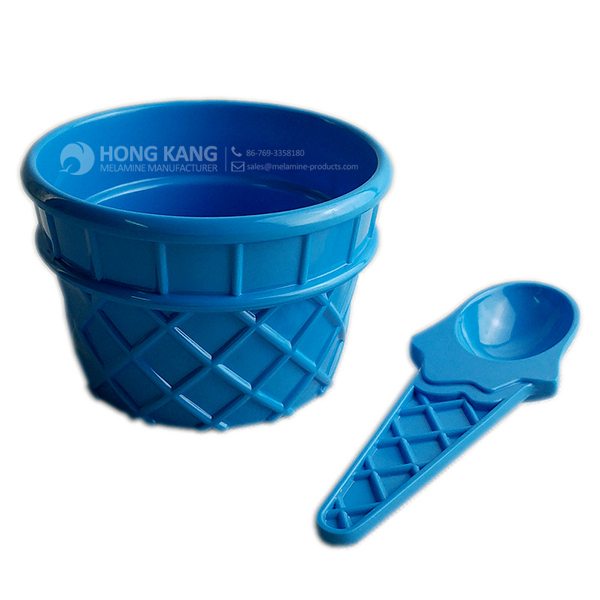
    Factory made hot-sale melamine ice cream bowls to venezuela Factories Detail:

    Specification
    Item Name 4inch Round Melamine Ice cream bowl
    Item No. BW207
    Shape Round
    Body Color Colorful
    Decal Color 4 colors print (if need)
    Finish Glossy
    Style Fashion
    Motif Design Customized
    Shape Design OEM/ODM
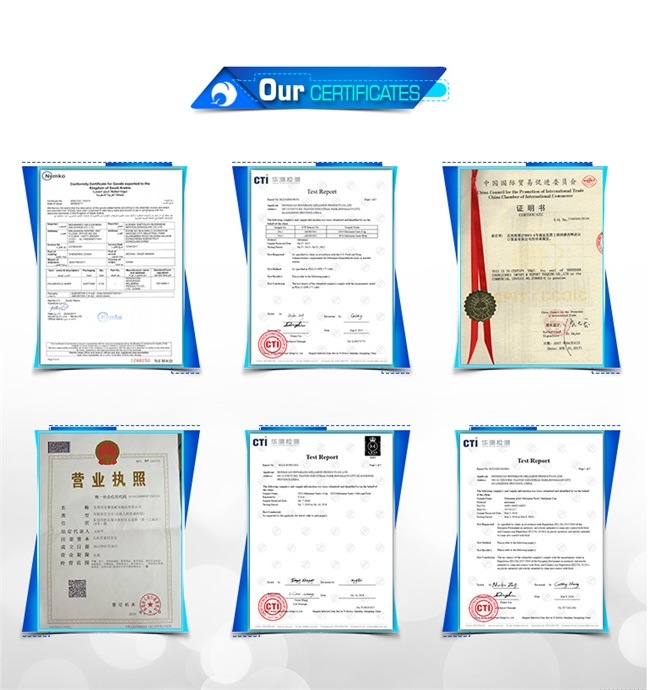
    Test Standard FDA,PROP 65,EN71,LFGB etc. by SGS or ITS
    Packaging 12pcs/box,72pcs/carton
    Dimensions
    Length 10 cm
    Width 10 cm
    Height 6.5 cm
    Capacity N/A
    Material
    Body Material 100%melamine
    Decal Material (if need) 4 colors print (CMYK), or spot color printing, RoHS certificate
    Imprint (if need) Seiko ink type 1000 or other type, RoHS certificate
    Accessories Information
    Lid included No
    Other Melamine Ice Cream Spoon
    Weights
    Net Weight (kg) 5.3
    Shipping Weight (kg) 6.5

    Product detail pictures:

    Factory made hot-sale
 melamine ice cream bowls to venezuela Factories detail pictures

    Factory made hot-sale
 melamine ice cream bowls to venezuela Factories detail pictures


    Related Product Guide:
    The Benefits Of Using Silicone Kitchen Utensils
    Top Ten Power Toothbrushes

    We emphasize advancement and introduce new products and solutions into the market each year for Factory made hot-sale melamine ice cream bowls to venezuela Factories, The product will supply to all over the world, such as: Jordan , Qatar , Madagascar , Our company offers the full range from pre-sales to after-sales service, from product development to audit the use of maintenance, based on strong technical strength, superior product performance, reasonable prices and perfect service, we'll continue to develop, to deliver the high-quality items and services, and promote lasting cooperation with our customers, common development and create a better future.

    FAQ: 1.Q: Where is your factory located? How can I visit there? A: Our factory is located in Guangdong province, China. Warmly welcome to visit us! 2.Q: What is the material of your products? A: The material is melamine.  3.Q: How can I get some samples? A: We can send the samples by Express/DHL/FedEx/UPS etc. 4.Q: How does your company do regarding quality control? A: We have a very strict QC system. Our inspectors have been closely monitoring the production process from the selection of raw materials to the final step of the finished products. 5.Q: Can you print our logo on the product & packing? A: Yes, We can print your logo on our products. Multicolor-Plastic-Dinnerware-Melamine-Dinner-Plate
    * Do Not Touch On Fire Directly
    * Do Not Washing By Steelwire Ball
    * Non-Microwave Ovens
    * Dishwasher Safe


  • What is ACOUSTIC FOAM? What does ACOUSTIC FOAM mean? ACOUSTIC FOAM meaning – ACOUSTIC FOAM definition – ACOUSTIC FOAM explanation.

    Source: Wikipedia.org article, adapted under https://creativecommons.org/licenses/by-sa/3.0/ license.

    Acoustic foam is an open celled foam used for acoustic treatment. It attenuates airborne sound waves by increasing air resistance, thus reducing the amplitude of the waves. The energy is dissipated as heat. Acoustic foam can be made in several different colors, sizes and thickness.

    Acoustic foam can be attached to walls, ceilings, doors, and other features of a room to control noise levels, vibration, and echoes.

    Many acoustic foam products are treated with dyes and/or fire retardants.

    The objective of acoustic foam is to improve the sound quality by removing residual sound in any space. This purpose requires strategic placement of acoustic foam panels on walls, ceiling and floors, effectively eliminating resonance within the room.

    The objective is to enhance the properties of sound by improving speech clarity and sound quality. For this reason, acoustic foam is often used in recording studios. The purpose is to reduce, but not entirely eliminate, resonance within the room. This is achieved by placing similar sized pieces of foam, often in the shape of cones or triangles, on opposite walls.

    Acoustic foam is a lightweight material made from polyurethane foam either polyether or polyester, and also extruded melamine foam. It is usually cut into tiles – often with pyramid or wedge shapes – which are suited to placing on the walls of a recording studio or a similar type of environment to act as a sound absorber, thus enhancing the sound quality within a room.

    Acoustic foam reduces or eliminates echoes and background noises by controlling the reverberation that sound can make by bouncing off walls. This type of sound absorption is different from soundproofing, which is typically used to keep sound from escaping or entering a room. Therefore, acoustic foam is installed in large rooms like churches, synagogues, concert halls. These rooms have large, flat space and noise will certainly bounce around in the room. These sound absorbers are used to improve the acoustics of the room, which thereby reduces noise in the room.

    Acoustic foam typically deals more with the mid and high frequencies. To deal with lower frequencies, much thicker pieces of acoustic foam are needed; large pieces of acoustic foam are often placed in the corners of a room and are called acoustic foam corner bass traps.


    Follow us on TWITTER: http://twitter.com/cnforbiddennews
    Like us on FACEBOOK: http://www.facebook.com/chinaforbiddennews

    China’s food safety issue has long been worsening.
    Over 10,000 Chinese food products have additives,
    and an adult in China consumes on average
    80 to 90 kinds of additives per day.

    Internet author “Ni Lai Shuo Shuo Hao Bu” writes
    sarcastically that contaminated food
    should be served at national banquets
    in the Great Hall of the People,
    and a “Chinese¬-Style” menu should read:

    ”Dish 1: Tainted Meat Balls,
    made with “lean meat powder,” contaminated pork,
    and toxic water from Ting river
    polluted by Zijin Minding Group.”

    ”Dish 2: Szechuan Hotpot,
    made with swill-cooked oil, and spices like DDVP,
    artificial coloring, plaster,
    and opium powder for flavor enhancement.”

    ”Dish 3: Special Beef Skewer,
    prepared with “special beef” made from pork.
    First, the pork is deodorized with maltol;
    then we spread “beef cream” over the pork;
    and lastly, we cook the pork to turn it into beef.”

    ”Dish 4: Black Fungus with Creamy Cabbage,
    prepared with asphalt, ink, glue-treated fungus,
    and melamine-contaminated milk power.”

    The most flavorful dishes
    are made with antibiotics-treated abalone,
    sulfate-smoked shark fins, formalin-treated
    sea cucumbers, fake fish maw made with pig skin,
    industrial salt treated dry oysters,
    phosphor powder-bleached abalone mushrooms,
    Sudan-red-colored pigeon eggs,
    and contraceptive pills-fed turtles.

    For stable foods, there is fake rice and pea cakes,
    made with stale grains, and dyed steamed buns.
    For beverages, there is industrial alcohol liquor
    and fake wine made with artificial coloring,
    flavors, and various industrial additives.

    China food safety problems
    have been causing scares internationally,
    and abuses of additives play a crucial role.

    Chinese media reported that additives were found
    in food products from preserved vegetables to jelly;
    16 kinds of additives were found in ice cream,
    while 14 were found in instant noodles.
    Over 90% of food products contain additives,
    and over 2000 additives in total were used
    in everyday food products.

    Zhaong Jianbo, researcher at the Chinese Center
    of Disease Control: “In many cases, food without
    additives are even less safe. With no preservatives
    added, instant noodles will go bad in under 2 days.”

    However, research contradicts Zhang’s claim.
    Studies show that many modern diseases
    are caused by chemical additives.
    Clenbuterol, known as “lean meat powder,”
    is one of many such harmful chemicals.

    Dr. Zhao Lin at the PLA General Hospital believes
    that it is a serious problem when financial gains
    are driving manufactures to abuse food additives.

    Prof. Wu Jingming at China University of Political
    Science and Law, says that laws in China
    are not comprehensive enough to control
    the food supply chain. Regulative agencies
    prove incompetent in areas such as agriculture,
    sanitation, quality control, and commerce.
    Moreover, technology in food safety testing
    is outdated in China. All of the above
    have contributed to the additives’ abuse problem.

    NTD reporters Tang Rui and Xue Li

    《神韵》2011世界巡演新亮点

    http://www.ShenYunPerformingArts.org/

    Perfect services, quality products and competitive prices, we have work many times, every time is delighted, wish continue to maintain!
    5 Stars By Jodie from Cologne - 2015.02.21 12:14
    It is a very good, very rare business partners, looking forward to the next more perfect cooperation!
    5 Stars By Carol from Romania - 2016.08.21 14:13

    Related Products

    WhatsApp Online Chat !